The Gap Between the Hype and Your Reality
Every week there's a new headline about AI transforming some industry. And every week, a lot of small business owners read it, nod, and then go back to answering emails manually, copying data between spreadsheets, and wondering if any of this actually applies to them.
It does. But not in the way the headlines suggest.
You don't need to build a custom AI model. You don't need a data science team. What you need is a clear-eyed look at where your time goes, and a willingness to test a few tools that already exist and are already priced for businesses like yours.
Start With the Work, Not the Tool
The biggest mistake small businesses make with AI is starting with the technology and working backward. Someone hears about a tool, signs up for a free trial, and then tries to figure out what to do with it. That approach almost always leads to abandonment.
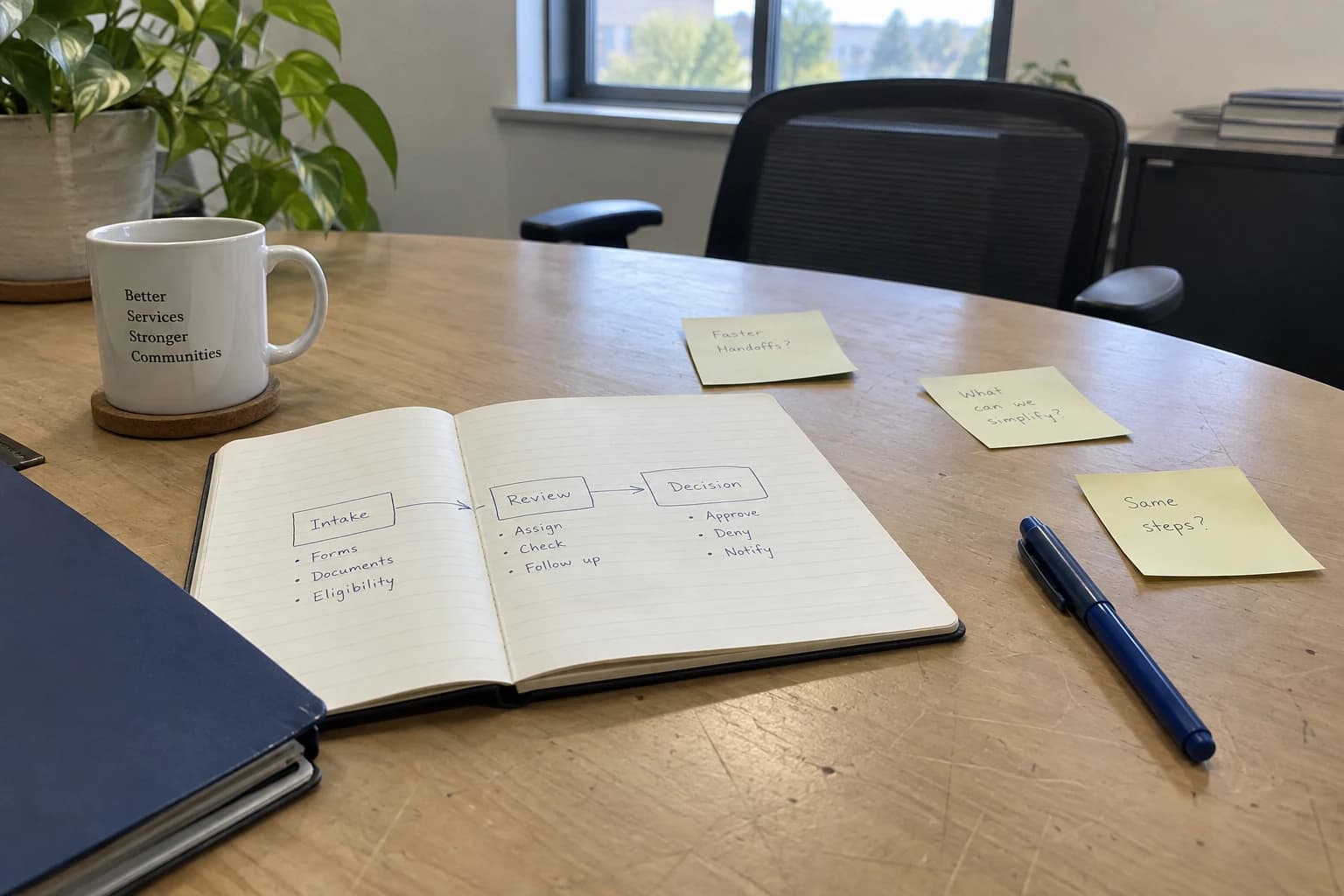
Instead, start by writing down the five tasks your team repeats most often. Think about things like:
- Answering the same customer questions over and over
- Drafting emails, proposals, or social media posts from scratch each time
- Sorting through inbound leads and deciding who to follow up with first
- Pulling together reports from multiple sources
- Scheduling, reminders, and basic project coordination
Any task on that list that is repetitive, rule-based, or involves turning information from one format into another is a reasonable candidate for AI assistance. That's your starting point.
What AI Is Actually Good At Right Now
AI tools in their current state are genuinely useful for a specific category of work. They are strong at generating first drafts, summarizing long documents, answering common questions, classifying and sorting information, and suggesting next steps based on patterns.
They are not reliable as a final decision-maker, they can make confident-sounding mistakes, and they work best when a human reviews their output before it goes anywhere important.
Keeping that in mind will save you frustration. Think of AI as a capable assistant that needs supervision, not a replacement for judgment.
Three Practical Places to Start
Writing and Communication
Generative AI tools are genuinely good at helping you produce written content faster. If you spend significant time writing customer emails, follow-up messages, job postings, product descriptions, or marketing copy, a tool like this can produce a solid working draft in seconds.
You still need to review and personalize the output. But going from a blank page to a usable draft cuts the time on these tasks dramatically. For a business owner who wears ten hats, that matters.
Customer-Facing Chat and FAQs
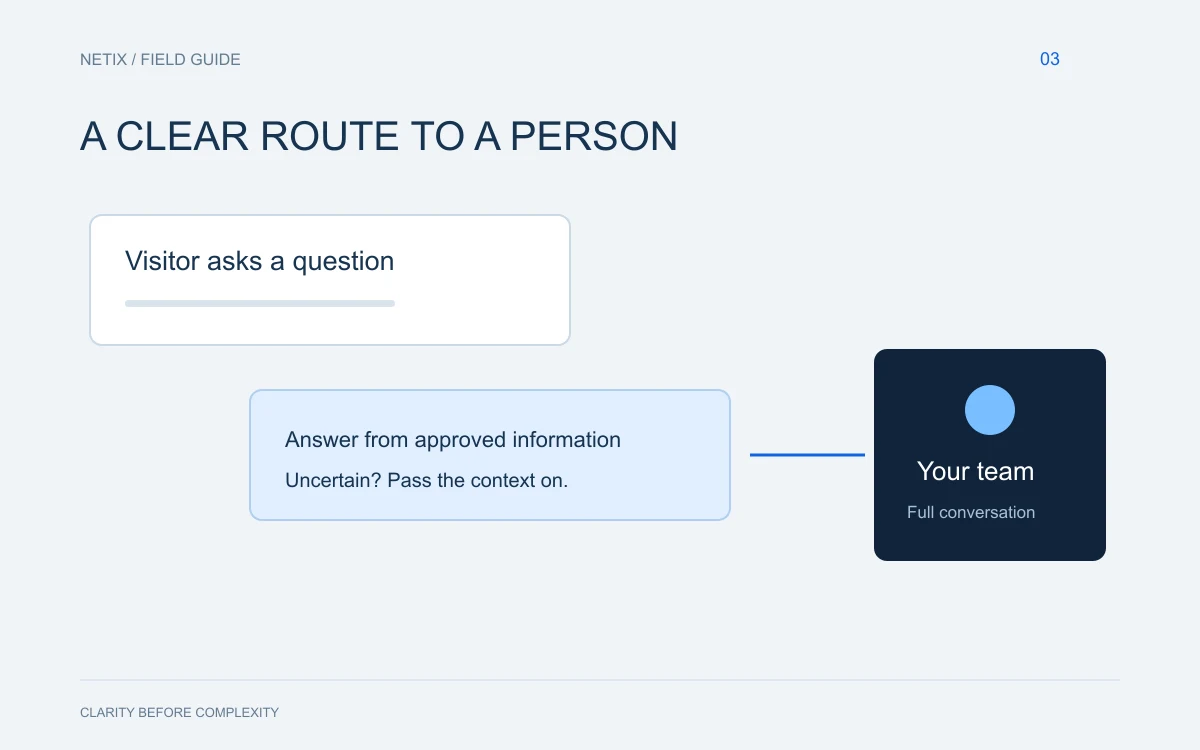
If your website or phone line regularly receives the same questions — hours, pricing, service areas, how to get started — an AI-powered chat widget can handle those conversations around the clock without pulling you or your staff away from other work.
These tools have become much easier to set up. Many connect to a simple knowledge base you build yourself, using plain language, no coding required. A visitor gets an answer immediately. You don't have to interrupt what you're doing.
Internal Summarization and Research
If your work involves reading long documents, vendor contracts, customer feedback, or research, AI can compress those into summaries and pull out the key points. This is not glamorous, but for a business owner who is trying to make a decision quickly, it is genuinely useful.
Some tools let you paste in a document and ask questions about it in plain English. That alone can save hours across a week.
How to Evaluate a Tool Before You Commit
Most AI tools worth considering offer a free tier or a trial period. Use that time deliberately rather than just poking around.
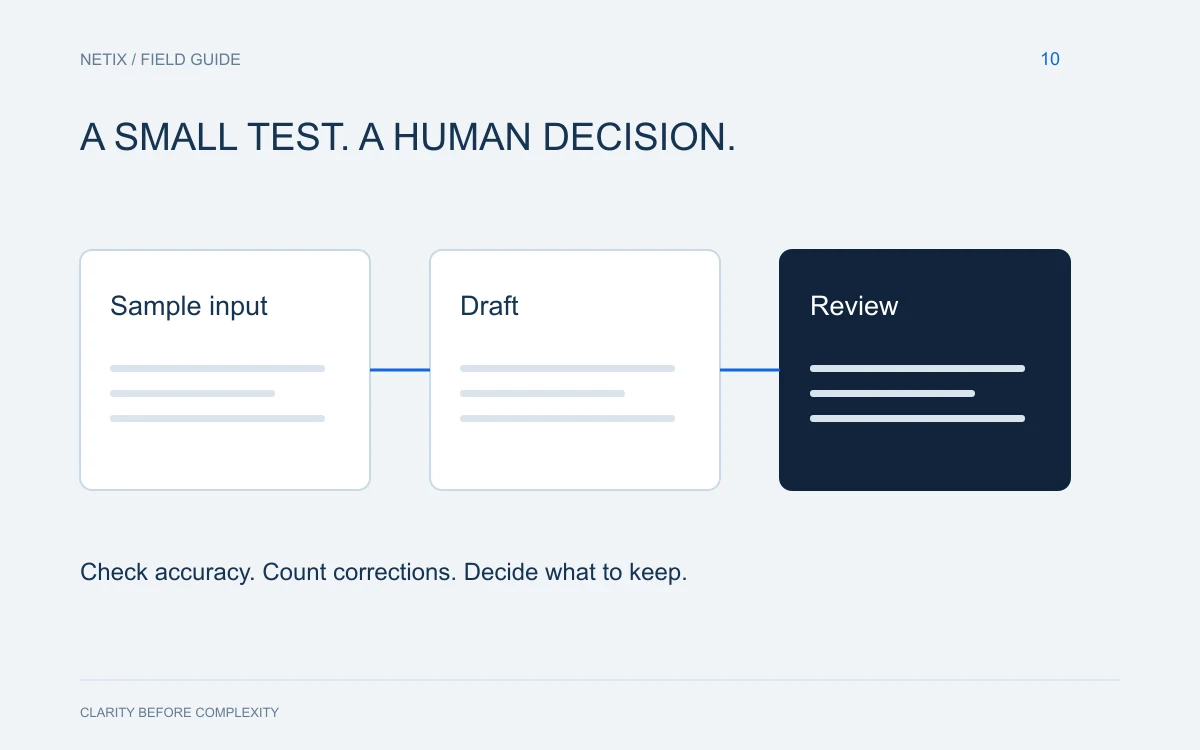
Pick one specific task. Run ten real examples through the tool. See what the output quality looks like. Measure roughly how much time it saves versus how much time you spend reviewing and correcting. If the math works, keep it. If it doesn't, move on without guilt.
Also pay attention to where your data is going. Reputable tools are transparent about how your inputs are used and stored. For anything involving sensitive customer information, read the privacy terms before you start.
Connecting AI to the Rest of Your Business
One area where small businesses often leave value on the table is integration. An AI tool that lives in isolation is useful but limited. An AI tool that connects to your existing systems — your CRM, your inbox, your scheduling software — starts to become genuinely powerful.
Automation platforms designed for non-technical users can link tools together so that, for example, a new inquiry from your website automatically gets logged, categorized, and assigned a follow-up task, without anyone touching it manually.
This kind of setup takes some initial thought to design correctly, but once it is running, it runs on its own. That is where AI stops being a novelty and starts being infrastructure.
Keep It Simple and Keep Moving
The goal right now is not to have a comprehensive AI strategy. The goal is to remove one painful bottleneck from your week, see what that feels like, and build from there.
Pick one task. Try one tool. Give it a real test with real work. That is all the complexity you need to start.
Businesses that are seeing results from AI are not the ones who planned the most. They are the ones who started the smallest and stayed consistent.
If you're not sure which part of your business is the best place to start, or if you want help connecting tools to your website and existing systems in a way that actually holds together, the team at Netix Solutions is happy to talk it through with you. No pressure, no jargon — just a practical conversation about what makes sense for where you are right now.