The Subscription Trap
Most businesses start the same way. You need to send invoices, so you grab QuickBooks. You need to manage customers, so you add a CRM. You need to schedule your team, so you subscribe to something else. Each tool makes sense on its own.
Then one day you look up and you are paying for eight platforms, your team is copying data between three of them every morning, nothing talks to anything else, and somehow you still do not have the reports you actually need to run the business.
This is not a failure of discipline. It is a natural ceiling that growing businesses hit. And when you hit it, adding another subscription usually makes the problem worse, not better.
What Off-the-Shelf Software Is Good At
Before going further, it is worth saying clearly: packaged software is excellent for a wide range of needs, and you should not build something custom just because you can.
General-purpose tools work well when your process matches the way the tool was designed to work, when your team is small enough that manual steps are not a bottleneck, and when the cost of subscriptions is lower than the cost of building and maintaining something purpose-built.
If QuickBooks handles your accounting and your accountant already knows it, do not replace it. If your CRM is doing the job, leave it alone. Custom software is not a status symbol. It is a solution to a specific class of problem.
The Signals That You Have Outgrown Your Stack
There are patterns that show up reliably when a business has crossed the line from "subscriptions are working" to "subscriptions are holding us back."
- Manual bridges between tools. Someone on your team exports a spreadsheet from one system and imports it into another. This happens daily or weekly, it takes real time, and it introduces errors. If this sounds familiar, you are paying a human to do what software should do.
- You have built workarounds inside the software. You are using the notes field to track things notes were never meant to track. You have a color-coding system in your project tool that only two people understand. Your CRM has thirty custom fields and none of them are labeled clearly. The tool is bending to your process instead of supporting it.
- Reporting requires assembly. To answer a basic question about your business — revenue by service type, jobs completed per technician, open client requests by status — someone has to pull from multiple places and stitch it together in a spreadsheet. Leadership is making decisions on old data because fresh data is too hard to get.
- Onboarding new staff takes too long because of tool complexity. When the system is so patched together that it takes weeks to teach someone how to navigate it, the system is the problem.
- You are paying for features you cannot use. Enterprise-tier plans that include things irrelevant to your business, just to access the two features you actually need.
- A single clunky process is costing you customers. Slow proposals, confusing client portals, payment friction — if the experience your customers have is limited by what your software stack can produce, that is a revenue problem.
What Custom Software Actually Looks Like for a Small Business
Custom software does not have to mean a massive, years-long project. For most growing businesses, it looks more like a targeted tool that solves a specific, high-friction problem.
Common examples include an internal dashboard that pulls data from your existing tools into one place so you can actually see what is happening; a customer portal where clients can submit requests, check status, and communicate without calling your front desk; a workflow automation that moves a job from inquiry to scheduled to invoiced without anyone touching it manually; or an internal tool that replaces a spreadsheet your team has been nursing for three years.
These are not moonshot projects. They are focused builds that remove specific friction from a specific part of your operation.
How to Think About the Build-vs-Subscribe Decision
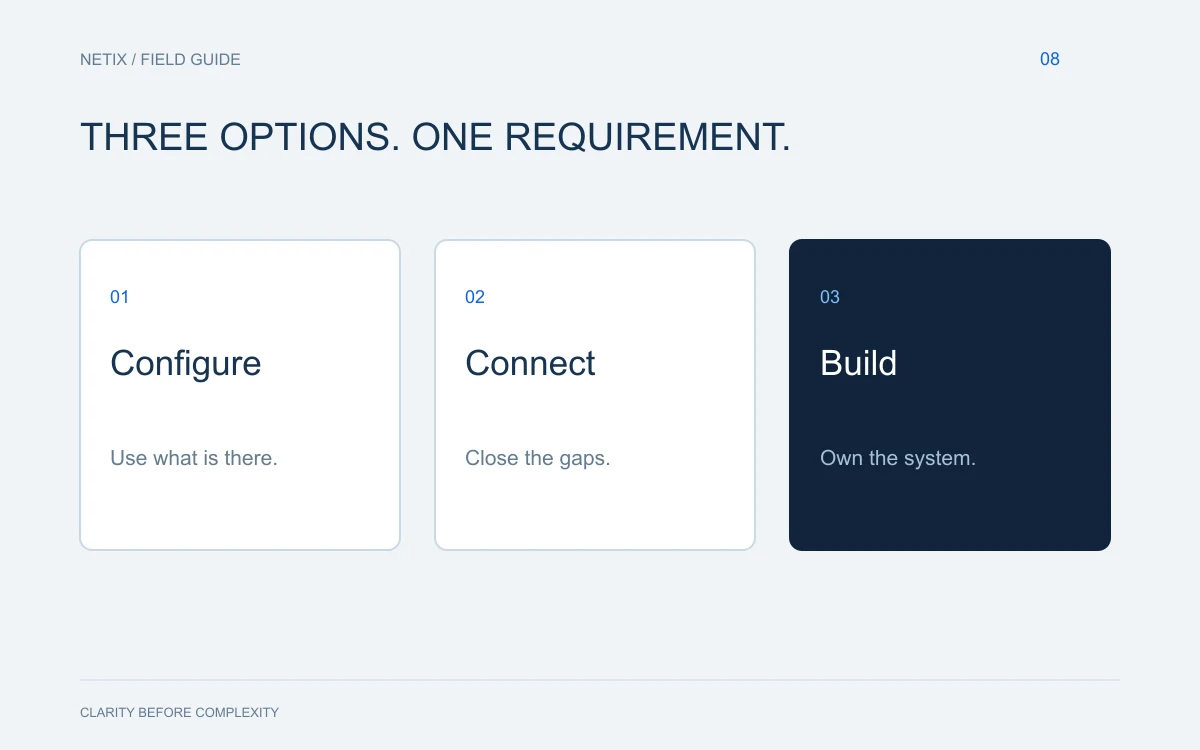
A useful way to frame the decision is to ask three questions.
First, is this process unique to how your business works? If the way you manage a job, price a service, or serve a client is genuinely different from how your competitors do it, off-the-shelf software was built for the average, not for you. Custom software can reflect exactly how you work.
Second, what is the real cost of the current approach? Add up the subscription fees, the staff hours spent on manual work, the errors that need correcting, and the decisions that get made on incomplete information. Compare that to the cost of building something that handles it cleanly. The math is often closer than it looks.
Third, will this problem get worse as you grow? If the answer is yes — and it usually is — then solving it with another workaround just delays an inevitable rebuild at a more painful scale.
A Practical First Step
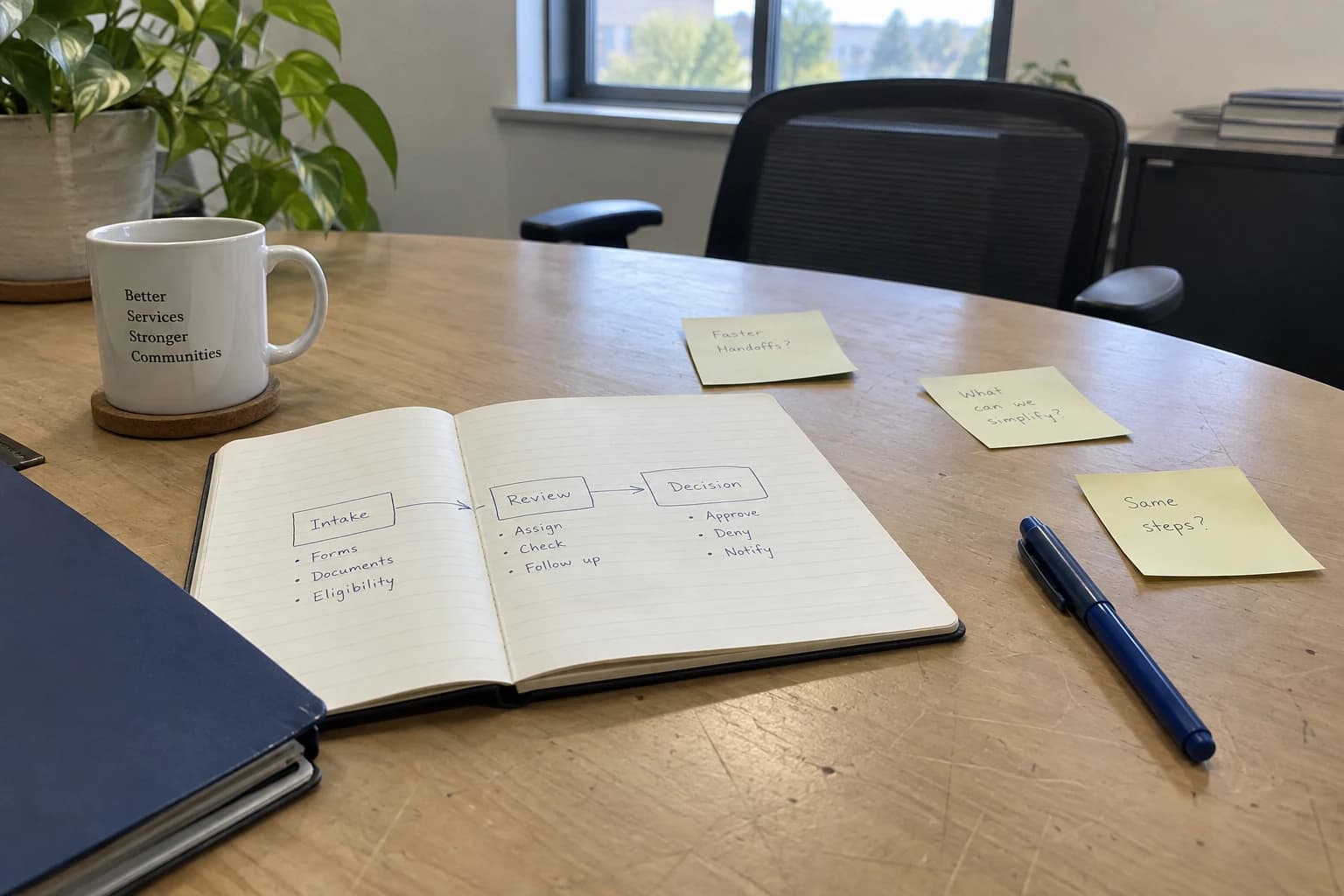
You do not need to know exactly what to build before having a conversation about it. The most useful starting point is to document your highest-friction process: the thing your team complains about most, or the manual step that takes the most time each week. Bring that to a development conversation and ask whether there is a targeted way to address it.
The goal of custom software is not to replace every tool you have. It is to remove the specific friction that is slowing your growth down.
Netix Solutions works with growing businesses nationwide to build exactly this kind of focused, practical software — internal tools, dashboards, automations, and customer portals designed around how your business actually operates. If you are not sure whether your situation calls for a build or a better subscription, that conversation is a good place to start.